
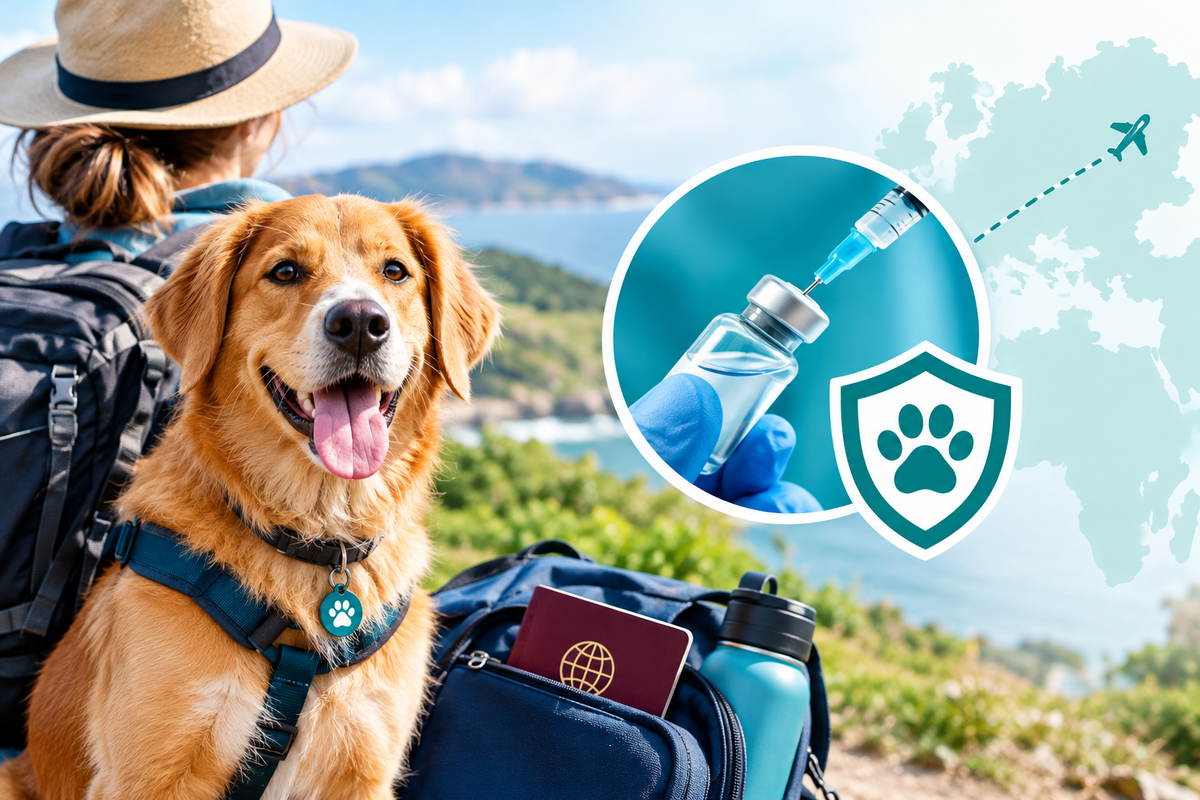
Learn about rabies vaccination in Wales, including who needs it, vaccine schedules, costs and side effects. Discover where to get a rabies vaccine in Ceredigion, Pembrokeshire, Monmouthshire,Cowbridge,Cr Aberystwyth, Wales, and what to do after an animal bite or scratch while travelling abroad.
If you are planning to travel abroad from Wales, rabies vaccination may be an important part of your travel health preparation. The need for vaccination depends on your destination, the length of your stay, the activities you plan to undertake and how easily you could access medical treatment if bitten or scratched by an animal.
Rabies is a serious viral infection that affects the brain and nervous system. Although human rabies is extremely rare in the UK, infection is almost always fatal once symptoms develop. The good news is that rabies can be prevented through appropriate vaccination before travel and urgent medical treatment after a possible exposure.
This guide explains who should consider the rabies vaccine in Wales, how the vaccination course works, possible side effects, costs and what to do if you are bitten or scratched by an animal while travelling.
What is rabies?
Rabies is a viral infection transmitted through the saliva of an infected animal. It usually enters the body through a bite or scratch, or when infected saliva comes into contact with broken skin or the eyes, nose or mouth.
Dogs are the most common source of human rabies infections worldwide. Cats, monkeys, bats and other mammals can also transmit the virus.
Rabies remains a concern in parts of Asia, Africa, Central and South America, and other areas where the virus circulates in animal populations.
In the UK, rabies is absent from terrestrial animal populations, but some bats can carry rabies-related viruses. Contact with bats in the UK should therefore be taken seriously.
Who should have the rabies vaccine before travelling?
The rabies vaccine is recommended for certain travellers whose activities or travel arrangements put them at increased risk. It is not routinely required for every overseas trip.
A travel health professional can assess your individual risk by considering your destination, itinerary, accommodation, planned activities and access to healthcare.
You may need rabies vaccination if you:
- Are travelling to a country where rabies is present and medical treatment may be difficult to access quickly.
- Plan to stay abroad for more than one month.
- Will be trekking, cycling, running, camping or undertaking other outdoor activities where animal encounters are possible.
- Expect to work with animals, including dogs, cats, monkeys or wildlife.
- Are travelling to remote areas where rabies vaccines or rabies immunoglobulin may not be readily available.
- Are travelling with children who may be more likely to approach or touch unfamiliar animals.
People who work with rabies virus, handle potentially infected animals or regularly handle bats may also require vaccination for occupational reasons.
Important: The recommendation is based on your individual risk, not simply the country you are visiting. Check the latest destination-specific guidance before travelling.
How does the rabies vaccine work?
The rabies vaccine stimulates your immune system to produce antibodies against the virus. Vaccination before exposure prepares your immune system to respond more effectively if you subsequently encounter rabies.
Pre-exposure vaccination is particularly useful for travellers visiting higher-risk destinations because it simplifies the treatment required after a possible exposure.
However, the rabies vaccine does not remove the need for urgent medical assessment following an animal bite or scratch. Even fully vaccinated travellers must seek medical advice after a possible exposure.
How many rabies vaccine doses do you need?
For pre-travel vaccination in the UK, the standard course traditionally consists of three doses.
A commonly used schedule is:
Dose
Typical timing
First dose
Day 0
Second dose
Day 7
Third dose
Day 21 or 28
The exact schedule depends on the vaccine, clinical guidance and your circumstances. An accelerated schedule may be appropriate when travel is approaching, but it must be assessed by a qualified healthcare professional. Additional doses may be advised for certain higher-risk groups.
Arrange your travel health consultation ideally at least eight weeks before departure. This allows time to assess your vaccination requirements and complete any necessary courses.
If your departure date is approaching, seek advice rather than assuming it is too late to be vaccinated.
Can you get the rabies vaccine in Wales?
Yes. Rabies vaccination for travel is available through private travel health clinics and pharmacies that provide travel vaccination services. Some GP practices also offer private travel vaccinations.
In Wales, the rabies vaccine is generally not available free on the NHS when required solely for travel. You will usually need to pay for the vaccine and any associated consultation charges.
The cost varies between providers and depends on the number of doses required. Before starting a course, ask the provider for the price per dose, the total course cost and whether consultation or administration fees are additional.
For occupational vaccination, speak to your employer or occupational health service about the appropriate arrangements.
Rabies vaccination at Central Pharmacy, New Quay
Central Pharmacy provides travel health services in New Quay, Ceredigion. If you live in Ceredigion or elsewhere in Wales and are planning an overseas trip, you can contact the pharmacy to enquire about rabies vaccination and travel health advice.
Central Pharmacy
Church Street, New Quay, Ceredigion, SA45 9NX
Telephone: 01545 560294
WhatsApp: 07584 981306
Contact the pharmacy to confirm current rabies vaccine availability, appointment arrangements and the full cost of the vaccination course before attending. cost is £66 per dose,
A travel health assessment should take account of your destination, travel dates, previous vaccinations and planned activities. You should also discuss any other travel vaccines or malaria prevention that may be appropriate for your itinerary.
What are the side effects of the rabies vaccine?
Most people tolerate the rabies vaccine well. Side effects are usually mild and short-lived.
Possible side effects include:
- Pain, redness or swelling at the injection site.
- Headache.
- Tiredness.
- Muscle aches.
- Mild fever or a general feeling of being unwell.
Serious allergic reactions are rare but require immediate medical attention.
Before vaccination, tell the healthcare professional about any previous severe allergic reactions, allergies to vaccine ingredients, significant medical conditions, pregnancy or medicines that suppress your immune system. These details help the clinician assess the appropriate vaccination plan.
If you have a high temperature or feel significantly unwell, contact the clinic for advice about whether vaccination should be postponed.
What should you do if an animal bites or scratches you abroad?
An animal bite or scratch in a country where rabies is present requires urgent assessment. Do not wait for symptoms to appear.
Follow these steps:
1. Wash the wound immediately. Thoroughly wash and flush the affected area with soap and plenty of running water for at least 15 minutes.
2. Seek urgent medical care. Attend an appropriate medical facility as soon as possible, even if the wound appears minor.
3. Explain your vaccination history. Tell the clinician whether you have previously received rabies vaccination and provide your vaccination records if available.
4. Follow the recommended treatment. Depending on the exposure and your vaccination history, you may need rabies vaccine doses and, in some circumstances, rabies immunoglobulin.
5. Do not wait until you return to Wales. Treatment must be assessed and started promptly. If you receive treatment abroad, arrange further medical advice on returning to the UK.
If you are bitten or scratched by a bat in the UK, seek urgent medical advice. You should also seek prompt assessment if a potentially infected animal's saliva contacts your eyes, mouth or broken skin.
In Wales, you can contact NHS 111 Wales for urgent advice if you are unsure where to obtain help. A suspected rabies exposure should not be managed by booking an ordinary travel vaccination appointment alone.
Does having the rabies vaccine mean you cannot get rabies?
No vaccine provides a reason to ignore a possible exposure. Pre-exposure vaccination offers important protection and changes the treatment needed after an exposure, but it does not mean that further treatment is unnecessary.
People who have completed a recognised pre-exposure course generally require additional rabies vaccine doses after a significant exposure. Rabies immunoglobulin is not usually required for people who have previously completed an appropriate course, although individual circumstances and current guidance must be checked.
People with significant immune suppression may require a different treatment schedule and additional monitoring.
Do you need a rabies booster before every trip?
Most travellers who have completed an appropriate pre-exposure course do not need routine booster doses before every holiday.
A booster may be considered following an individual risk assessment, particularly for people returning to high-risk areas or those whose work involves ongoing exposure. People with frequent or occupational exposure may need a different monitoring and booster schedule.
Take your vaccination records to your travel consultation so the healthcare professional can determine whether any additional doses are appropriate.
How can you reduce your risk of rabies while travelling?
Vaccination is only one part of rabies prevention. You should also:
- Avoid touching or feeding stray dogs, cats, monkeys and other unfamiliar animals.
- Do not approach wild animals, even if they appear friendly or healthy.
- Teach children to avoid animals and to tell an adult immediately about any bite or scratch.
- Find out where to obtain urgent medical care at your destination.
- Check the latest travel health advice for every country on your itinerary.
If an animal bites, scratches or licks broken skin, wash the area immediately and obtain medical advice without delay.
Frequently asked questions about rabies vaccination in Wales
Is the rabies vaccine free on the NHS in Wales?
Rabies vaccination required solely for travel is generally not available free on the NHS. Private travel clinics and pharmacies may provide it for a fee. Different arrangements may apply for specific occupational risks, so seek advice from your employer or healthcare professional.
How much does the rabies vaccine cost in Wales?
There is no single price across Wales. Costs vary by provider, and a full course may require several doses. Ask your chosen clinic for the total cost, including the consultation, vaccine and administration fees.
How long before travelling should I get the rabies vaccine?
Ideally, arrange a travel health consultation at least eight weeks before departure. The usual pre-exposure course takes several weeks, although alternative schedules may be appropriate following clinical assessment.
Is rabies vaccination necessary for a short holiday?
Not necessarily. The recommendation depends on the destination, activities, accommodation, animal exposure risk and access to medical care. A short trip involving remote travel or animal contact may carry a different risk from a short stay in a lower-risk location.
Can children have the rabies vaccine?
Rabies vaccines can be used in children when indicated. The need for vaccination and the appropriate schedule should be assessed by a qualified healthcare professional. Children travelling to areas where rabies occurs need particular advice because they may not report an animal encounter promptly.
What happens if I have already had the rabies vaccine?
Bring your vaccination record to your travel consultation. The clinician can assess whether your previous course was complete and whether any further doses are appropriate for your planned trip.
Can I have the rabies vaccine after an animal bite?
Yes, rabies vaccine is used as part of post-exposure treatment. However, treatment after a possible exposure is urgent and may also require rabies immunoglobulin. Do not wait for a routine travel clinic appointment or for symptoms to develop. Seek urgent medical care.
Book a rabies vaccination consultation in New Quay, Wales
If you are travelling to a country where rabies occurs, arrange a travel health assessment before departure. Early advice gives you time to review your risks, check your previous vaccinations and complete any recommended course.
Contact Central Pharmacy in New Quay to enquire about rabies vaccination availability, appointment times and current prices.
Central Pharmacy, Church Street, New Quay, Ceredigion, SA45 9NX
Telephone: 01545 560294
WhatsApp: 07584 981306
Your travel health requirements will depend on your destination and individual circumstances. A consultation can help you make an informed decision about rabies vaccination and other travel health precautions.
Clinical information and further reading
For reliable, up-to-date advice, consult:
- NHS 111 Wales: Rabies — https://111.wales.nhs.uk/Rabies/
- NHS: Rabies vaccination — https://www.nhs.uk/conditions/rabies/vaccination/
- TravelHealthPro: Rabies — https://travelhealthpro.org.uk/factsheet/20/rabies
- UK Health Security Agency: Rabies guidance — https://www.gov.uk/government/publications/rabies-the-green-book-chapter-27
This article provides general information and does not replace an individual travel health assessment or urgent medical care after a possible rabies exposure.
Clinical review recommended before publication. Check the latest UK guidance and the vaccine product information when confirming schedules and treatment recommendations.
Rabies Vaccine in Wales from Just £66 per Dose
Get your rabies vaccine in Wales for just £66 per dose at Central Pharmacy, New Quay. Contact us today to check availability and book your travel vaccination appointment.
Book rabies vaccines